
Psychedelics
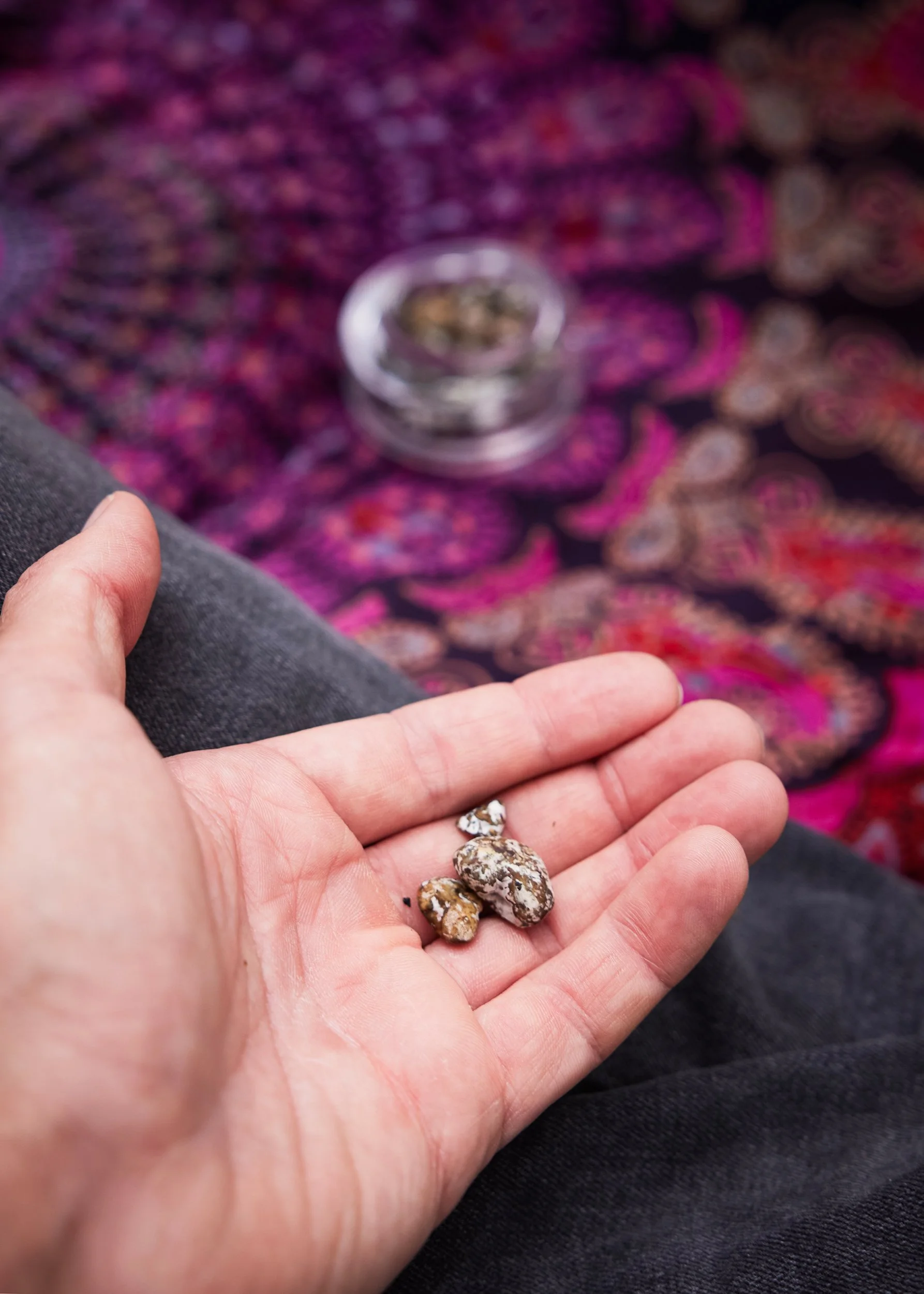
Psychdelics is not a drug.
Psychedelics are quite misunderstood. They are not a drug or narcotic. They are a key – a tool.
A key that can open the door to a broader experience of reality and a deeper understanding.
The human mind is incredibly sophisticated. One of its most powerful functions is the part of the ego that’s building a sense of identity. Over time, through memories of the past and expectations about the future, we develop a story about who we are. That story becomes our reality.
We start to believe we are a separate individual navigating a big, external world. On a practical level, that perspective is necessary — it helps us function. But it’s not the whole picture.
In expanded states of consciouness — accessed through psychedelics — it becomes possible to step outside that story. To see that what we call “me” is, in many ways, a construction. The ego isn’t the enemy. It’s a useful operating system. But it filters experience. It narrows perception.
Much of what we believe about ourselves isn’t purely ours. Our fears, values, and assumptions are shaped by family systems, culture, and generations before us. We inherit emotional patterns without realizing it.
In altered states of consciousness, those patterns can become visible. That shift can be freeing.
The mind craves control.
Certainty feels safe. We like believing we understand what’s happening and where we stand. We are in control.
When we temporarily loosen that grip — in a safe and intentional setting — new insight becomes possible.
It’s important to say that psychedelic substances are not the only path to this kind of awareness. Practices like meditation, breathwork, yoga, and disciplined self-inquiry can cultivate similar states over time.
The difference is speed. Psychedelics can act as a catalyst — accelerating a process that might otherwise take years of dedicated practice.
But the goal isn’t the altered state itself. The goal is clarity.
In my own experience, working with psychedelics allowed me to see my life with a level of honesty I hadn’t accessed before. I began to recognize where I was out of alignment — where I was living according to unconscious patterns rather than conscious choice. I saw how much of my identity was shaped by conditioning, fear and old narratives.
I also experienced something harder to describe: a sense of connection with the Universe, God. Not as a story or belief, but as a direct experience.
A recognition that I am not separate from the larger process of life. The same forces moving through the world move through us all.
In everyday life, it’s easy to lose that perspective. We get caught in responsibilities, distractions, and constant stimulation. Instead of slowing down to examine what’s out of alignment, we often look for quick relief — new achievements, new purchases, new relationships, or substances that temporarily numb discomfort.
For many people, alcohol plays that role. It can take the edge off. It can quiet anxiety for a while. I used it that way myself. But eventually I realized I wasn’t really looking for a drink — I was looking for change.
Psychedelics didn’t numb what was uncomfortable. They amplified it — but in a way that allowed me to see clearly what needed attention. The real work wasn’t the experience itself. It was what came afterward: making different choices, adjusting habits, and taking responsibility for my direction.
That’s an important distinction.
Psychedelics are not meant to be an escape, nor a permanent state to live in. They can offer a temporary suspension of habitual perception — a chance to reset the lens. But lasting transformation happens through integration. Through the willingness to examine strengths and weaknesses honestly, and to make grounded changes in everyday life.
Research on psilocybin in recent years has shown promising results in clinical settings, particularly in addressing depression, anxiety, trauma, and addiction. It is considered non-addictive and physiologically safe when used responsibly and in appropriate contexts. Still, these experiences are powerful. They require preparation, intention and respect.
A psychedelic experience can be expansive and beautiful. It can also be challenging. Confronting buried emotions or unresolved pain isn’t always comfortable. That’s why guidance and integration matter. Support before, during, and after the experience makes all the difference.
You don’t come back as a different person. You come back more aware. The ego is still there, it’s you — it has to be. But now you have more space around it. More choice. More perspective. You can begin to consciously direct your focus rather than react from old patterns.
In that sense, psychedelics can serve as a reminder. Not of something outside you, but of something fundamental within you — your capacity for awareness, growth, and alignment.
This isn’t about escaping your life.
It’s about seeing it clearly — and choosing to live it in alignment with who you truly are.